Last year, the White Bear Area Food Shelf served 78,298 visits. Keeping our shelves stocked to meet that level of need is a complex, year-round effort—and the sheer volume of food required can be hard to wrap your head around.
Food for the food shelf comes through four main channels: community donations, food rescue, purchased food, and The Emergency Food Assistance Program (TEFAP). Each plays a critical role in making sure our neighbors have consistent access to food.
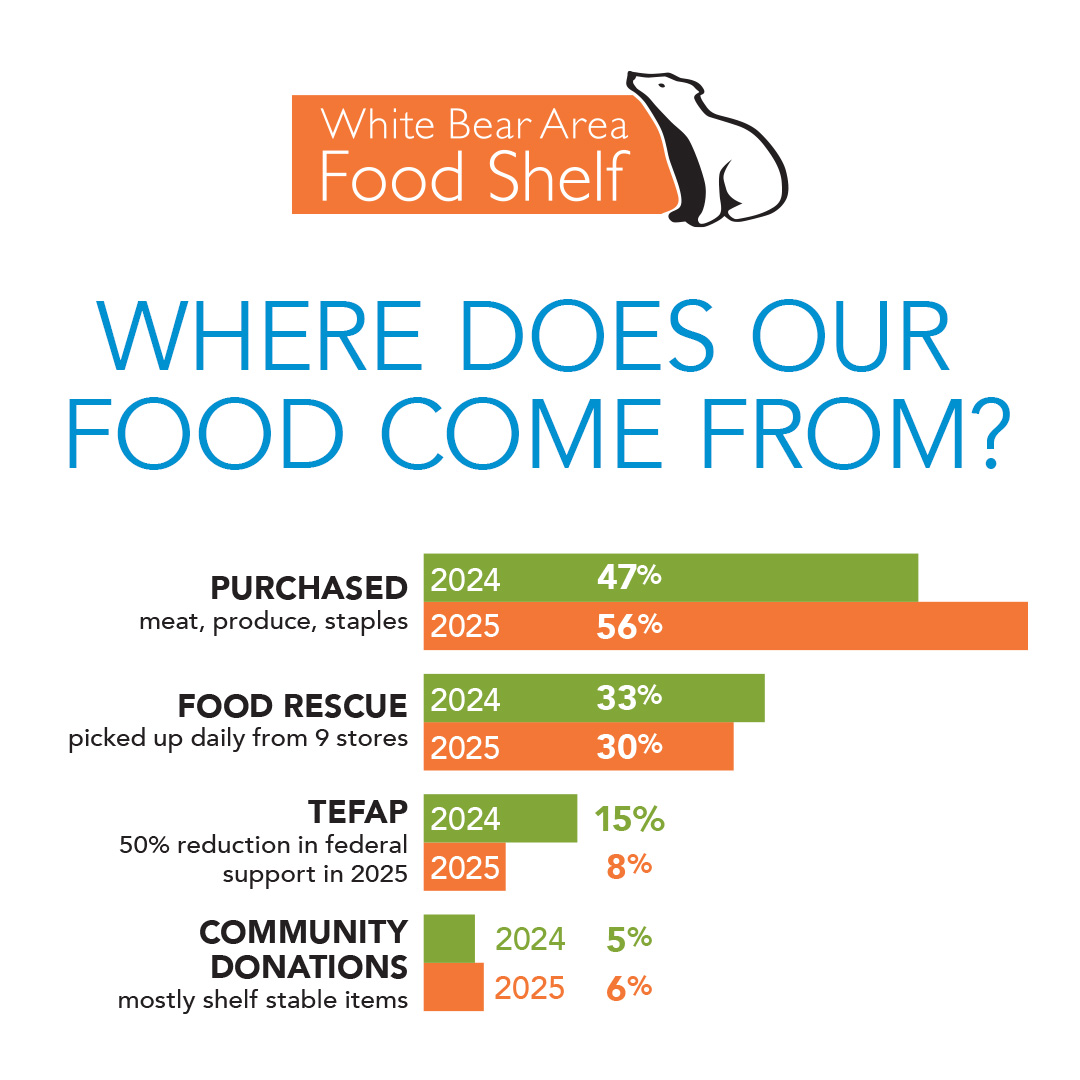
One of the food shelf’s key sources of food, The Emergency Food Assistance Program (TEFAP), is a federal program that helps supplement the diets of people with low income by providing them with 100% American-grown food assistance distributed through regional food banks. TEFAP provides nutritious, domestically produced food to Minnesotans in need while also providing direct support to the local agriculture community. However, in 2025, TEFAP funding was cut by 50%, significantly reducing the amount of free fresh food available from food banks. As a result, the food shelf had to purchase food to replace this free high-quality food.
Another essential part of the food shelf food supply is food rescued from nine local grocery stores, which makes up about one-third of everything on its shelves. This program brings in fresh produce, frozen meat, dairy, bakery, ready-to-eat meals, and seasonal items that would otherwise go to waste. Every rescued box represents a coordinated effort: grocery store staff set aside the food, volunteer drivers pick it up from nine partner locations, and additional volunteers sort and quality-check each item. Thanks to this teamwork, families leave with fresh, nutritious options while also reducing food waste and supporting environmental sustainability.
Why It Matters
Behind every item on the shelves is a story of coordination, generosity, and care. From neighbors donating food, to volunteers giving their time, to public programs and partnerships filling in the gaps, each piece works together to create a reliable food system for our community.
Because at the end of the day, this isn’t just about where the food comes from—it’s about where it’s going: back into the hands of our community.