Minnesota is home to two primary food banks — Second Harvest Heartland and The Food Group — and the White Bear Area Food Shelf partners with both. Recently, each organization completed statewide surveys to better understand the experiences of Minnesotans facing food insecurity. Here’s what they learned.
Second Harvest Heartland: Food Insecurity Is Tied to Household Stability
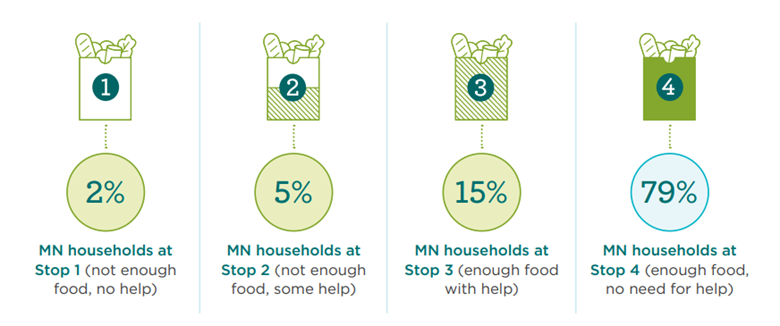
Second Harvest Heartland found that 1 in 5 Minnesota households cannot afford the food they need. But the deeper insight goes beyond food access alone.
42% of surveyed households reported concerns about overall household stability, including:
- Job security
- Housing costs
- Health-related challenges
These stressors directly affect a family’s ability to put food on the table. Food insecurity can happen suddenly because of a rent increase, an unexpected medical bill, or a job loss.
The survey also highlighted the essential role food shelves play in bridging the gap. Among households that were unable to purchase enough food:
- 45% received SNAP benefits
- 50% did not use SNAP, relying instead on food shelves and other community resources to meet their needs
This underscores the continued importance of having strong, local, accessible food shelf networks, especially for families who do not qualify SNAP.
The Food Group: Minnesotans Are Making Hard Choices
The Food Group’s statewide survey revealed that 72% of respondents have had to choose between paying for food and covering another essential expense. The most common trade-offs involved:
- Utilities
- Housing
- Transportation
Their findings also shed new light on how Minnesotans use food shelves:
- 83% of shoppers visit once a month
- 52% come looking for foods that meet health needs or chronic conditions
- October and November were the busiest months, reflecting a delay and uncertainty in SNAP benefits and funding
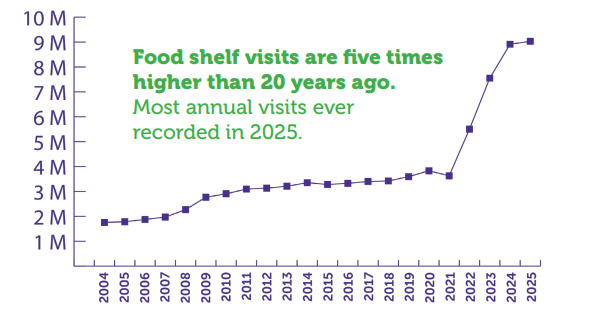
- More than 9 million food shelf visits occurred in 2025 across Minnesota
These numbers illustrate both the scale of need and the critical role food shelves play in supporting the health and stability of Minnesota families.
Moving Forward
Minnesota is fortunate to have a proactive, responsive food security system — built through collaboration between food banks, food shelves, community partners, and supporters like you. The insights from these surveys help us understand where the needs are greatest and how we can continue to show up for our neighbors.
One of the most important takeaways is that Minnesotans overwhelmingly identify employment, better jobs, more stable jobs, and higher paying jobs, as the key to improving their long-term food security. Strengthening household stability isn’t just about food access; it’s about the economic foundations that allow families to thrive.
Food shelves are a key part of Minnesota’s stability infrastructure. By providing consistent access to nutritious food, they help families maintain employment, manage health conditions, stay housed, and navigate unexpected financial stress during times of transition. Thank you for being part of this important work.