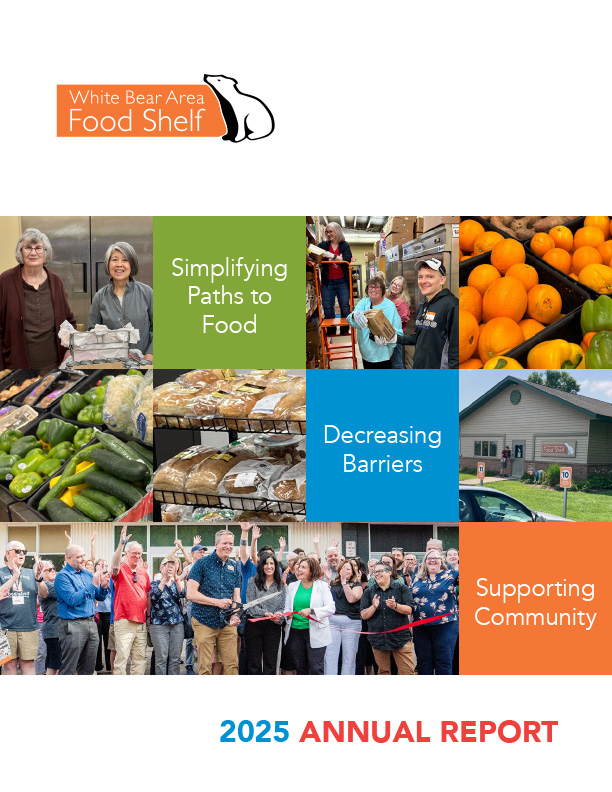
In a year of continuing rising levels of food insecurity in our community, we stayed focused on what matters most: creating welcoming, uncomplicated ways for people to access food. We are committed to providing a stable and supportive environment for everyone in need.
Recent research from Second Harvest Heartland found that 42% of Minnesota households worry about their overall stability, especially when facing rising costs in housing, utilities, and employment. These pressures can quickly disrupt a household’s budget and push families into food insecurity, forcing difficult choices between grocery budgets and other bills with deadlines. Having straightforward, reliable access to food helps neighbors stay steady through these moments of pressure and uncertainty.
Simplifying Pathways to Food is a Complex Task
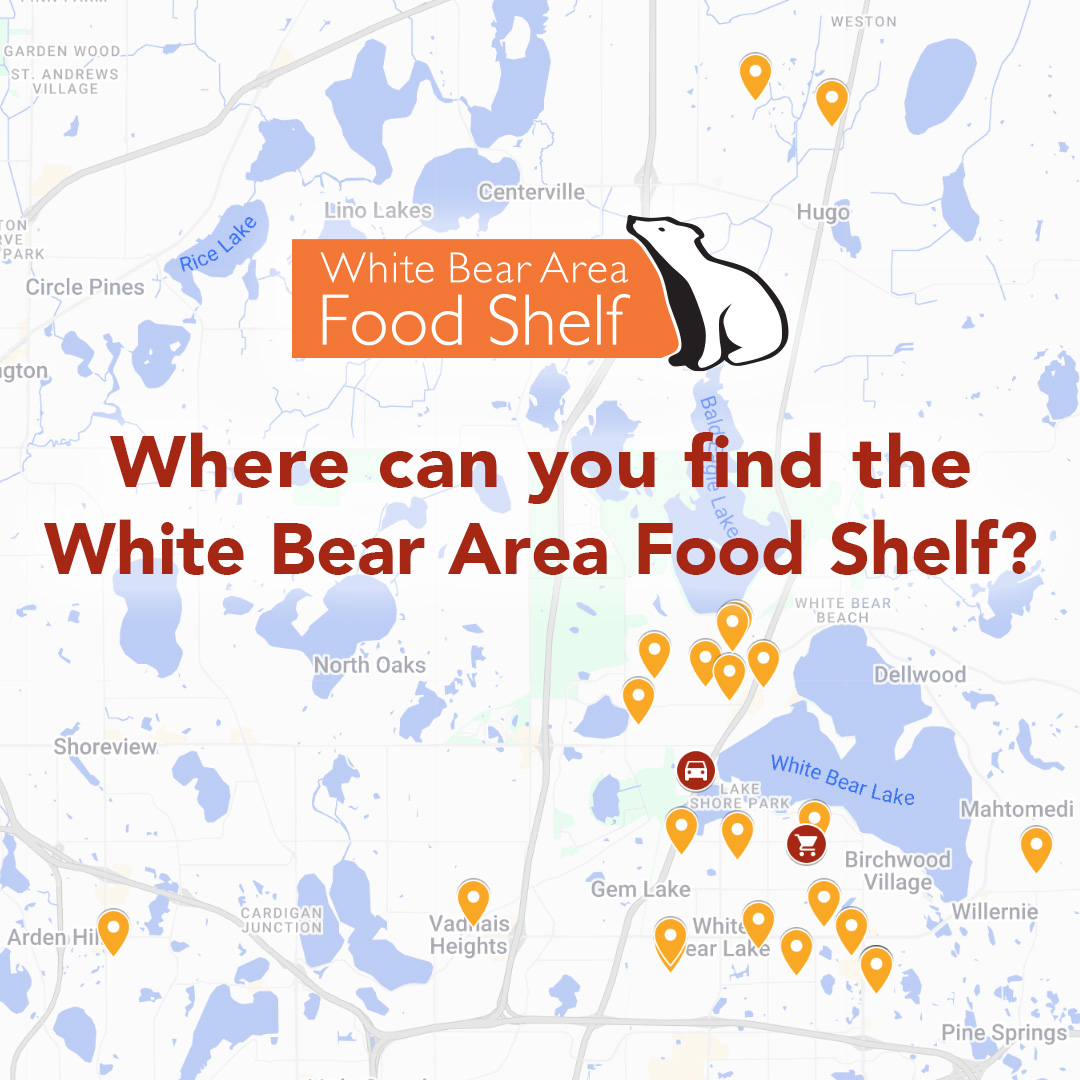
One of the ways we address this challenge is by increasing food accessibility. The White Bear Area Food Shelf provides food for the community at 28 locations throughout the year, including Mobile Markets, free produce markets in local parks, school and community partner pantries, and our flagship brick‑and‑mortar locations.
This year also brought changes to several of our funding sources. The Emergency Food Assistance Program(TEFAP) was reduced by 50%, and two federal grants were paused. These adjustments required us to be thoughtful and resourceful in how we operated, even as community need increased. Check out page nine to learn more about where our food comes from.
The Food Shelf depends on the reliable support of individual donors during times of wavering community resources and grants. Monthly gifts—whether $5, $25, $100, or any amount—help build the consistency we need to plan ahead, respond to changing conditions, and ensure food remains available to anyone who needs it. Thank you for your support and for helping strengthen access to food across our community.
Perry Petersen, Executive Director